
Organophosphorous Compounds
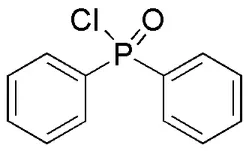
Diphenylphosphorus oxychloride
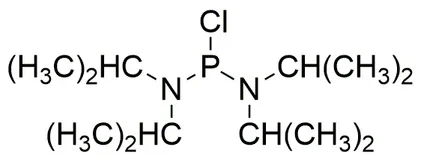
Bis(diisopropylamino)chlorophosphine
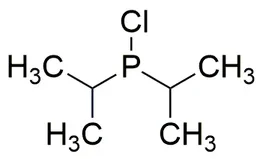
Chlorodiisopropylphosphine
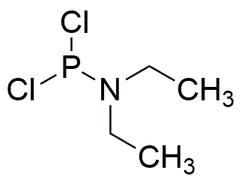
Dichloro(diethylamino)phosphine
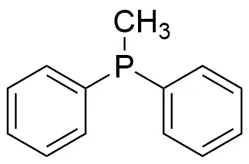
Methyldiphenylphosphine
-
Diphenylphosphorus oxychloride
Diphenylphosphorus oxychloride, also known as diphenyl chlorophosphate, is a versatile reagent widely used in organic synthesis for its efficient phosphorylating ability, making it particularly valuable in the preparation of phosphonates and phosphonamidates. Its structural features enable selective reactivity, allowing chemists to introduce phosphorus functionality into complex molecules with precision. In the pharmaceutical sector it is employed in the synthesis of APIs, notably in routes toward antiviral and anticancer agents, and in agrochemicals it contributes to the formulation of pesticides and herbicides by enhancing efficacy and stability through phosphorus incorporation. Because of its broad applicability and reliable performance in diverse chemical transformations, diphenylphosphorus oxychloride remains an important tool for research and industrial synthesis.
-
Bis(diisopropylamino)chlorophosphine
Bis(diisopropylamino)chlorophosphine is a versatile organophosphorus reagent noted for its distinctive reactivity and broad utility in synthetic chemistry. As a chlorophosphine, it serves as a convenient intermediate for preparing a wide range of phosphine derivatives and phosphine oxides, making it valuable in the synthesis of building blocks used in agrochemicals and pharmaceuticals. Its relatively good stability and predictable reactivity facilitate transformations that introduce a phosphine moiety, which is central to ligand and catalyst design. The compound’s sterically and electronically tunable diisopropylamino substituents allow fine control over electronic properties, a feature exploited in the development of novel catalysts, ligands, and phosphorus-containing materials. Ongoing research also explores its application in the synthesis of advanced polymers and coatings, where its compatibility with diverse substrates and reactivity can be leveraged to create functional materials, underscoring its role in driving chemical innovation.
-
Chlorodiisopropylphosphine
Chlorodiisopropylphosphine is a versatile organophosphorus compound valued for its distinctive structure and broad utility across academia and industry; it functions as an effective ligand in coordination chemistry, facilitating the synthesis of phosphine complexes and enabling formation of phosphine oxides and other derivatives. Its combination of stability and controlled reactivity makes it useful in catalyst development—improving reaction efficiency and selectivity in organic synthesis and polymer chemistry—and in the production of flame retardants and other functional materials. The compound’s propensity to form stable metal complexes extends its applications into materials science and nanotechnology, while its utility as a reagent and dehydrating agent supports diverse chemical transformations, including steps in the synthesis of active pharmaceutical ingredients, where precise control over reaction conditions is often critical.
-
Dichloro(diethylamino)phosphine
Dichloro(diethylamino)phosphine, also known as N-dichlorophosphanyl-N-ethylethanamine, is a versatile organophosphorus reagent prized for its balance of reactivity and manageable stability, which makes it useful across synthesis and industrial applications. As a phosphine precursor, it enables preparation of phosphine-based ligands that improve catalytic efficiency and selectivity in organic transformations, and it is routinely employed in the construction of diverse organophosphorus frameworks used in agrochemicals, pharmaceuticals, and materials science. Beyond ligand and catalyst development, the compound serves as a key intermediate in the manufacture of specialty chemicals and certain flame retardant formulations, where its chlorine functionality and diethylamino substituent permit targeted downstream modifications. Researchers value its predictable reactivity for assembling intricate molecular architectures and for tailoring properties to meet both academic research objectives and industrial process requirements, making it a practical and widely applicable component of synthetic toolkits.
-
Methyldiphenylphosphine
Methyldiphenylphosphine is a versatile organophosphorus compound whose methyl and diphenyl substituents confer distinctive steric and electronic properties that make it a valuable reagent in organic synthesis and catalyst design; it is widely employed to prepare phosphine ligands that stabilize transition metal complexes, improving efficiency and selectivity in homogeneous catalysis—particularly in cross-coupling and other ligand-dependent transformations—and it serves as a precursor to phosphine oxides and related derivatives used in materials science and pharmaceutical research, with its modifiable structure allowing tailored ligand development that enhances reactivity and stability relative to many alternative phosphines.